Emergency Frigidaire refrigerator repair in North Augusta, SC
A real Saturday service call involving a warm fresh-food section, severe evaporator frost, defrost-circuit testing, and thermal-camera verification.
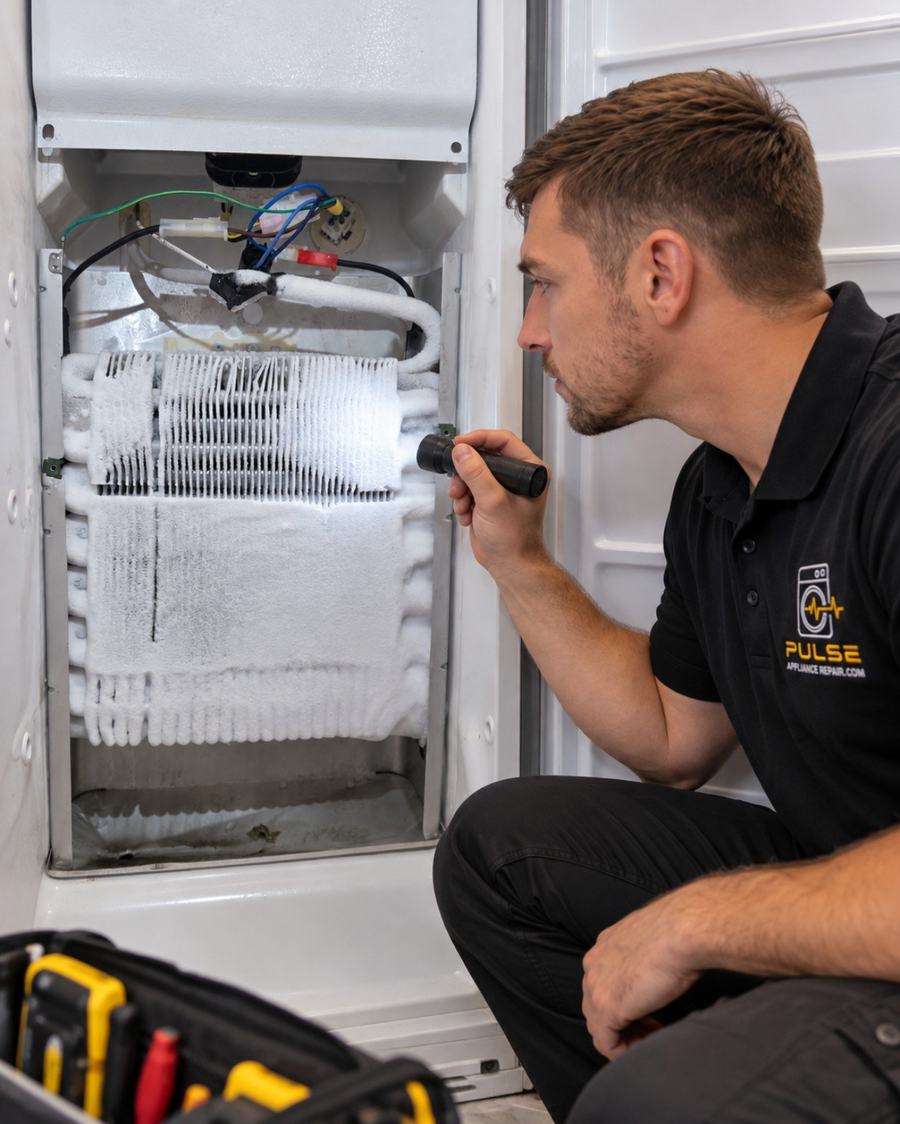
The complaint
On a Saturday service call, the customer reported that the refrigerator had suddenly stopped cooling properly. Because refrigerator temperature problems can quickly become a food-safety issue, the call needed prompt attention.
The temperature pattern told the first part of the story
The fresh-food section was around 65°F. In the freezer, the upper section was about 30°F, while the lower area near the evaporator was close to 5°F. That pattern suggested the refrigerator was still producing cold, but the cold air was not moving through the cabinet normally.
Heavy frost behind the freezer panel
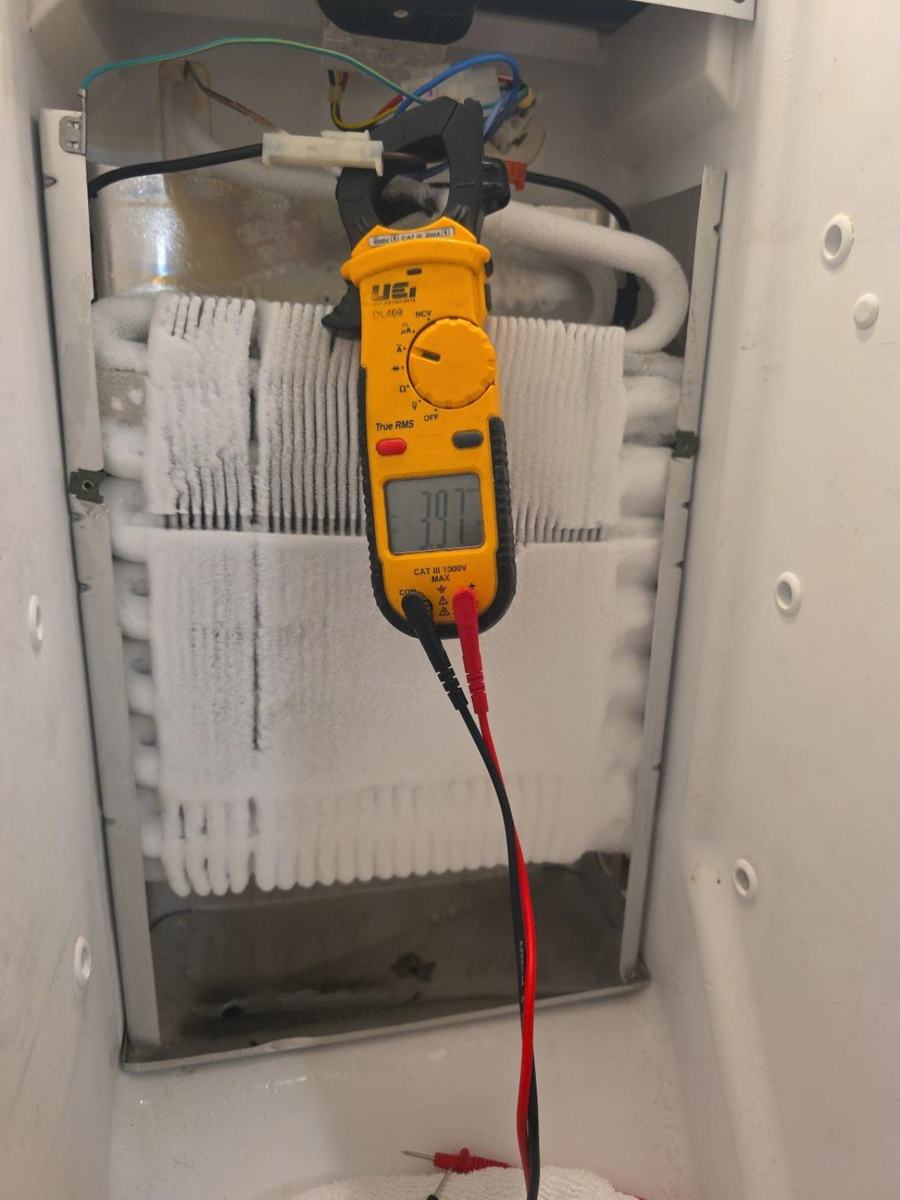
After the rear freezer panel was removed, the evaporator was found heavily covered with frost and snow. The frost buildup was restricting airflow and explained why the fresh-food compartment had become warm even though the evaporator area was still cold.
Service-mode defrost test
Pulse entered the Frigidaire service mode and selected the defrost test. During the test, the defrost heater drew almost 4 amps and began heating normally.
That confirmed three important points:
- The electronic control board could energize the defrost circuit.
- The control relay was switching power to the heater during the test.
- The defrost heater itself was operating.
Likely intermittent fault
Because the board and heater both operated correctly during testing, the most likely intermittent fault was an aging defrost thermostat / bimetal. After inspection and defrosting, replacement of that component was recommended to reduce the chance of the frost problem returning.
FLIR verification after defrost and testing
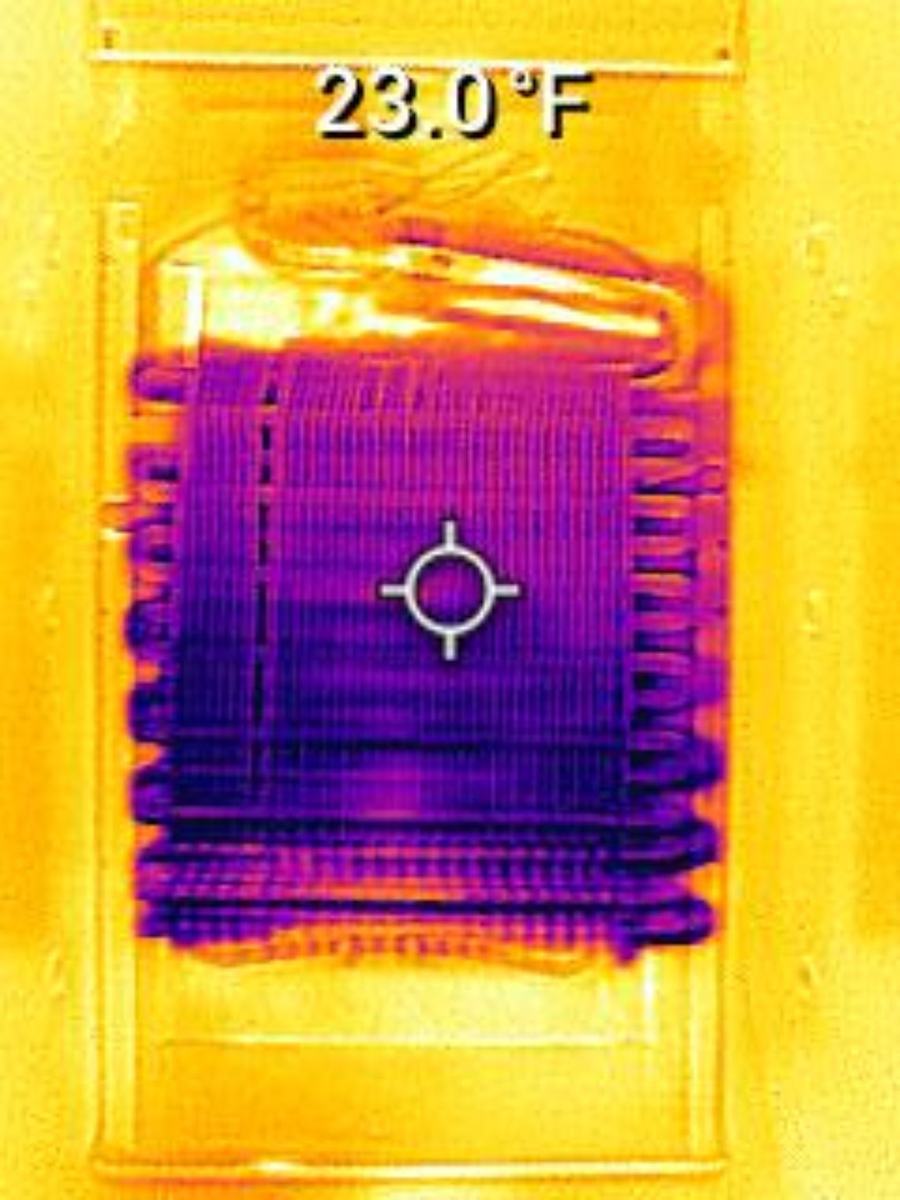
After the evaporator was defrosted and the defrost circuit was checked, Pulse used a FLIR thermal camera to document the evaporator pull-down. The thermal images showed the cooling pattern progressing across the evaporator over time, giving a clear visual check of system operation.
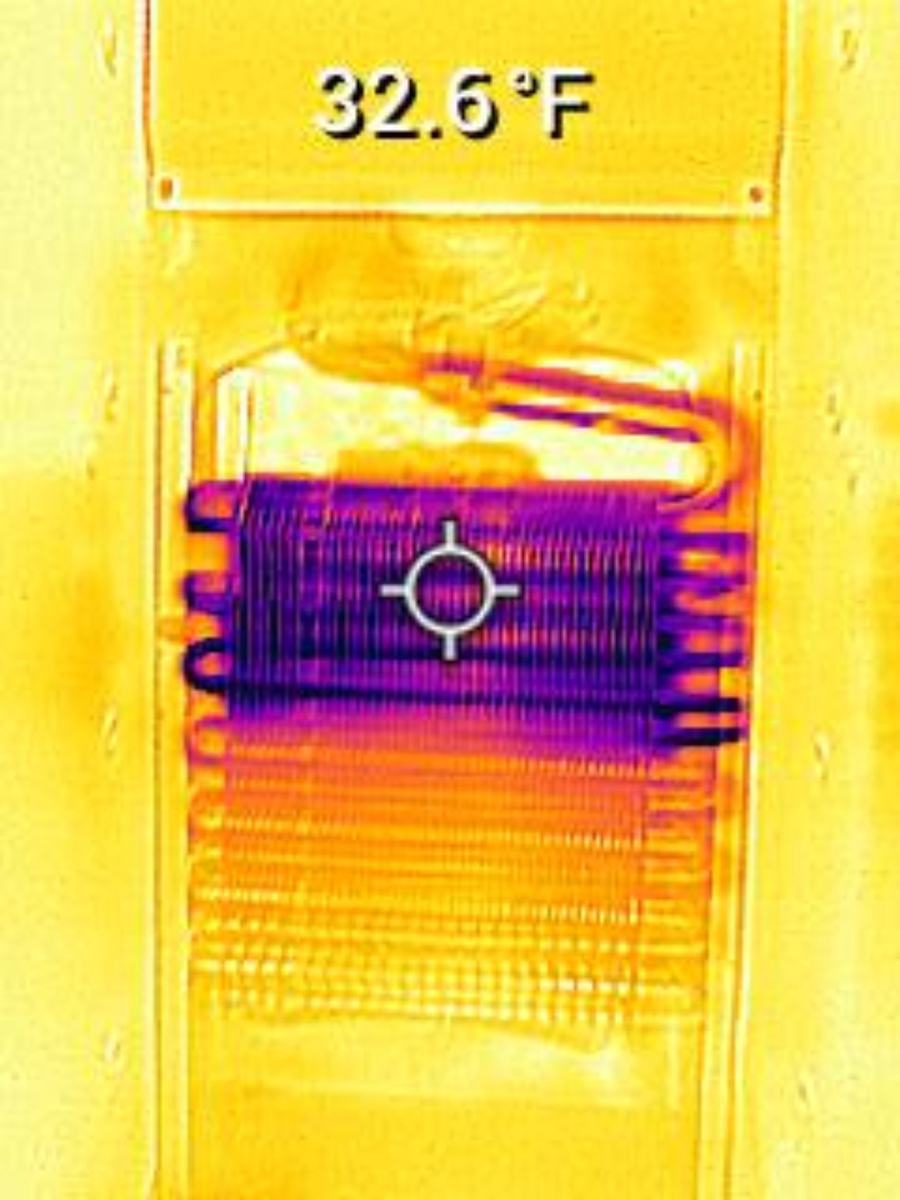
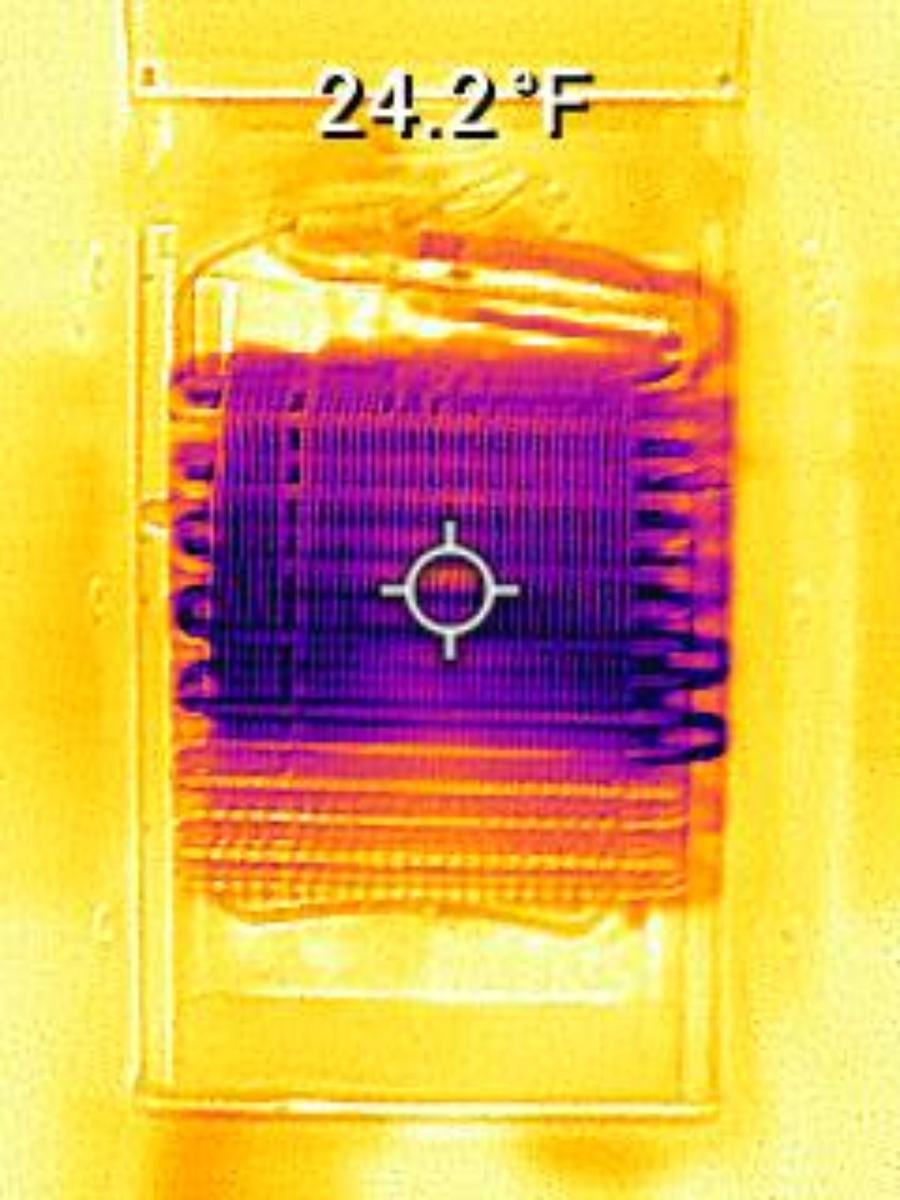
“Very professional, explained everything he was doing and showed me the readings on his Flir. He cleaned up after himself and left my refrigerator cleaner than he found it. I will definitely call again if needed.”
Result
Cooling operation returned after the evaporator was defrosted and the system was tested. The case demonstrates why frost-pattern inspection, electrical verification, and thermal imaging are useful together: each test answers a different part of the diagnosis instead of relying on guesswork.
Need refrigerator repair in North Augusta or the Greater Augusta area?
Tell Pulse the brand, model number, temperatures if you know them, and what changed before the cooling problem started.