Dryer is not heating
Pulse can inspect the symptom, explain likely causes, and recommend the right repair path.
Pulse Appliance Repair helps with dryers that do not heat, take too long to dry, make noise, stop mid-cycle, or have airflow and vent-related symptoms.
Every model is different. These common symptoms are a good reason to schedule a careful diagnostic visit before the problem grows.
Pulse can inspect the symptom, explain likely causes, and recommend the right repair path.
Pulse can inspect the symptom, explain likely causes, and recommend the right repair path.
Pulse can inspect the symptom, explain likely causes, and recommend the right repair path.
Pulse can inspect the symptom, explain likely causes, and recommend the right repair path.
Pulse can inspect the symptom, explain likely causes, and recommend the right repair path.
Pulse can inspect the symptom, explain likely causes, and recommend the right repair path.
We listen to the symptoms, inspect the appliance, explain what we find, and focus on honest repairs without unnecessary work.
We start with the issue, model behavior, error code, and what changed before the failure.
We check the likely causes and look for the real source before recommending parts or repair.
After repair, we test operation so the appliance is ready to go back into daily use.
These photographs show genuine Pulse dryer work and electrical measurement. They are not presented as proof of a repair in a specific city.
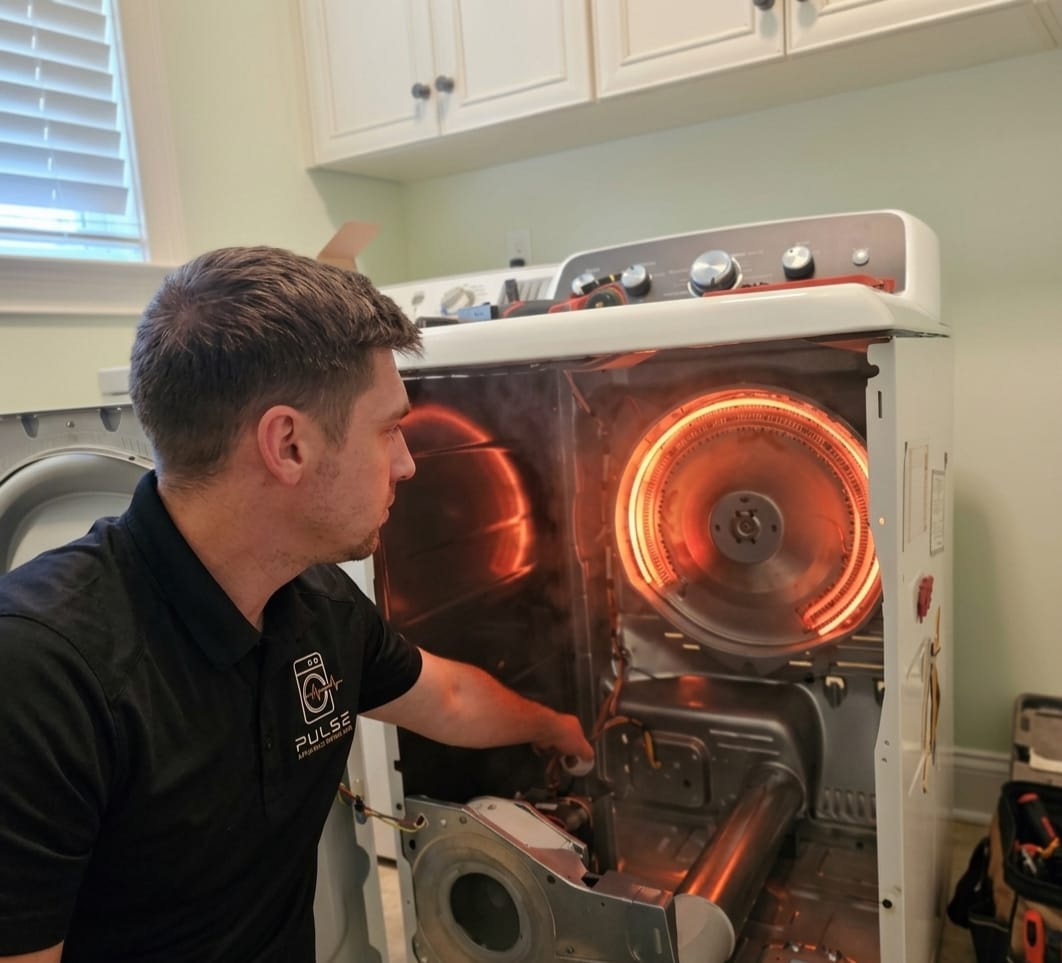
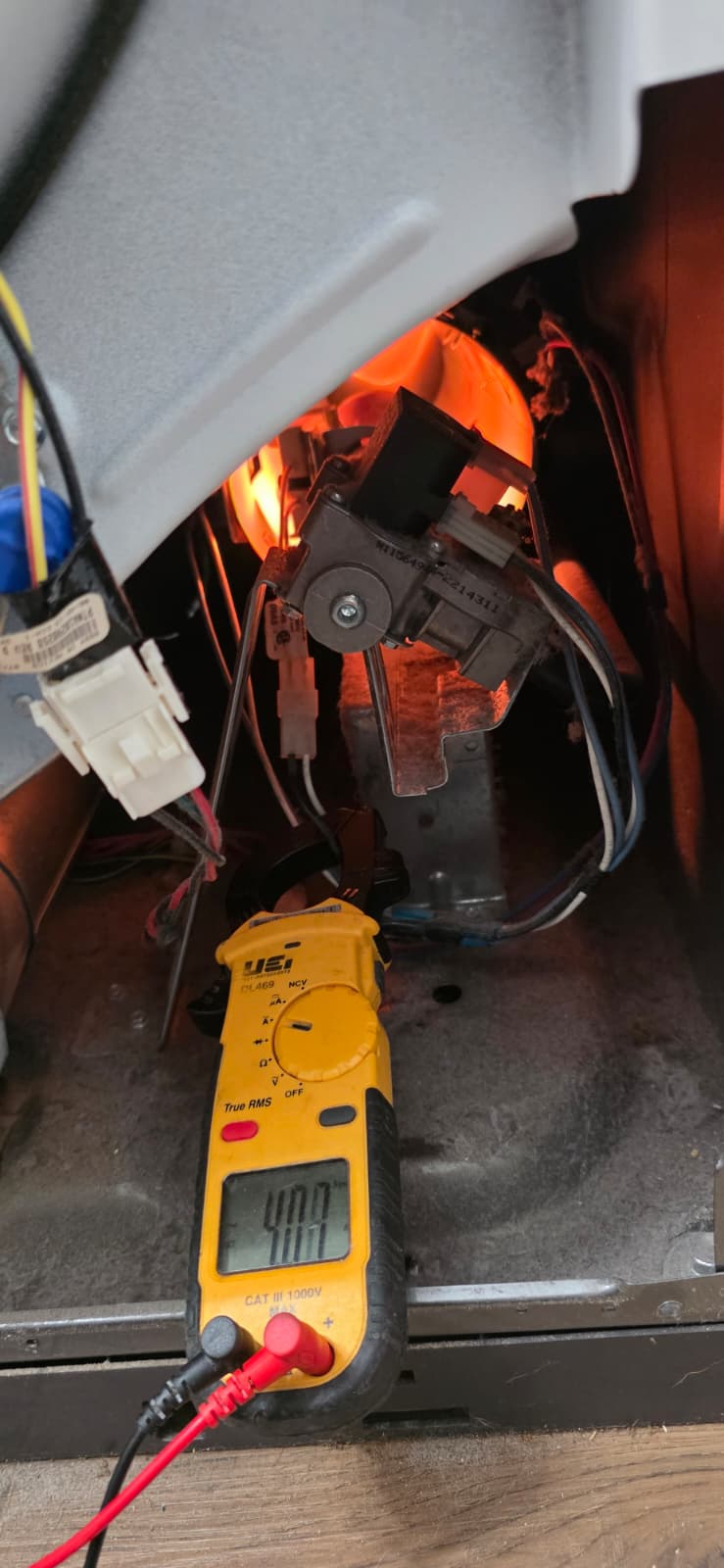
Clear preparation and safety guidance for the symptoms homeowners report most often.
The cause may involve power supply, airflow, a heating element, thermal protection, an igniter or gas-valve circuit, wiring, or controls.
Restricted vent airflow, an overloaded drum, incorrect settings, moisture sensing, or a heating problem can lengthen drying time.
Stop using it if you notice smoke, a burning smell, unusual cabinet heat, sparking, or harsh mechanical noise. Disconnect power only if it is safe to do so.
Share whether the dryer is gas or electric, whether the drum turns, whether any heat is present, the vent length if known, and the model number or error code.