KitchenAid sealed-system refrigerator repair in Appling, GA
A gradual loss of cooling led to a full sealed-system diagnosis and repair on a KitchenAid refrigerator. The work included nitrogen service, filter-drier replacement, evacuation, an R134a recharge by weight, sealant treatment, and thermal verification.
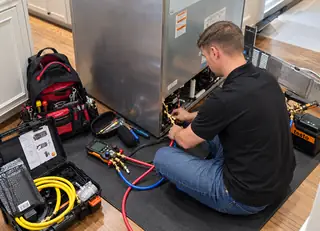
The complaint: cooling faded over several weeks
The customer reported that cooling had been getting progressively weaker for roughly two to three weeks. Ice production stopped first. The fresh-food compartment later climbed to about 65°F, while the freezer reached roughly 25°F. Eventually the refrigerator could no longer maintain food-safe temperatures and both sections moved toward room temperature.
What the evaporator pattern showed
The compressor was running, but the evaporator was not developing a normal cooling pattern. Only a small section of the coil was actively cooling. That pattern was consistent with an undercharged sealed system, so the diagnosis shifted away from an airflow or defrost problem and toward a refrigerant-loss issue.
The sealed-system repair
After the condition and repair options were explained, the customer authorized the work. The system was serviced carefully rather than simply adding refrigerant.
- The refrigeration circuit was thoroughly purged with nitrogen.
- The filter-drier was replaced.
- A Schrader service valve was installed at the compressor process connection.
- The system received another nitrogen purge and pressure test.
- A full evacuation was performed with a vacuum pump.
- The refrigerator was recharged by weight with 170 grams of R134a.
- Because the suspected leak area was not practically accessible, a sealed-system sealant treatment was added as part of the approved repair strategy.
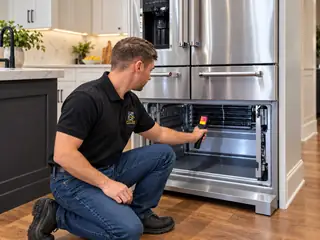
Thermal verification after the repair
After charging and restarting the refrigerator, the cooling pattern spread across the evaporator instead of remaining limited to a small section. The FLIR image below shows the evaporator at approximately 22.8°F during the pull-down period, supporting restored evaporator performance.

Why this is advanced refrigerator work
This was not a simple part replacement. Sealed-system service requires refrigeration tools, nitrogen, pressure testing, evacuation equipment, accurate charging by weight, and verification of system performance. Pulse Appliance Repair is equipped to diagnose and perform advanced refrigerator work when the repair is appropriate for the appliance and the customer.
Warranty coverage and repair terms depend on the specific repair method and scope and are explained before work is authorized.
Result
Cooling performance returned after the sealed-system service, and the evaporator showed a substantially improved temperature pattern. The case is a good example of why a slowly warming refrigerator should be diagnosed before repeated refrigerant top-offs or unrelated parts are replaced.
Need refrigerator repair in Appling or the Greater Augusta area?
Send the model number, current refrigerator and freezer temperatures, and a short description of how the cooling problem developed.